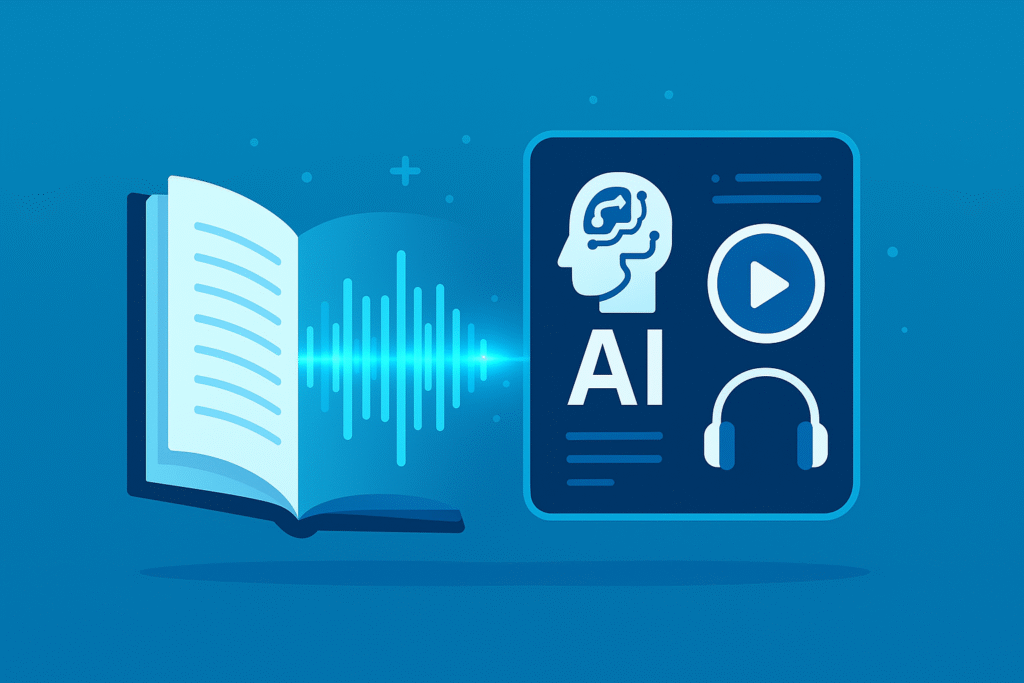
Turning your book into an audiobook has never been easier thanks to AI narration. In 2025 the best AI tool to turn your book into an audiobook can create human like voices in hours. Advanced platforms now deliver polished audiobooks without the long production timelines.
For authors and publishers choosing the best AI tool to turn your book into an audiobook saves time and money. Content creators can reach new audiences on platforms like Apple Books and Google Play Books. The best AI tool to turn your book into an audiobook offers high voice realism and editing control.
Pricing features and distribution support vary so selecting the right tool is crucial. Real user insights reveal which tools deliver quality reliability, and ease of use. This guide will help you find the best AI tool to turn your book into an audiobook for your project.
Why best ai tool to turn your book into an audiobook
AI audio has matured rapidly making it easier than ever to produce professional sounding audiobooks. The best AI tool to turn your book into an audiobook now creates voices that breathe pause and convey tone naturally.
Major distributors and publishers are beginning to accept or offer AI narration streamlining production. This evolution makes the best AI tool to turn your book into an audiobook ideal for faster cheaper audiobook creation.
Platforms like Audible Apple Books Google Play Books and Spotify now support AI or auto narrated content. Audible has introduced AI narration options and partnerships to expand AI audiobook availability.
Apple Books offers a digital narration program that converts ebooks using the best AI tool to turn your book into an audiobook. Google Play Books supports auto narration for eligible ebooks simplifying publishing at scale.
What to look for when choosing a tool
Choosing the best AI tool to turn your book into an audiobook depends on four simple priorities. First voice quality matters. If your book relies on emotional nuance or character dialogue pick a tool that emphasizes natural cadence and inflection.
Second licensing and distribution rights are critical. Confirm the tool’s commercial terms and whether the file formats and metadata meet the platforms where you plan to sell. Third long form handling is essential.
Some tools struggle with very long files or lose consistency across chapters. Fourth workflow and editing. If you like to make micro edits to pronunciation emphasis or pacing pick a platform with built in editors and pronunciation controls.
Leading tools in 2025 and who each helps
ElevenLabs is a leader in realistic expressive narration ideal for authors seeking premium voice quality subtle emotion and consistent performance across long manuscripts. Murf AI offers an intuitive studio style workspace with timeline editing voice libraries and export options perfect for non fiction authors educators and marketing teams.
Play ht excels in language reach supporting bulk processing SSML controls and multiple export formats for translated editions or multi title projects. WellSaid Labs targets enterprise teams needing studio grade output professional voice avatars and collaboration tools for branded high quality narration.
Other notable tools include Speechify for accessibility and fast production Listnr AI for broad language and podcast features and Descript for transcription editing and overdubbing. These AI platforms cater to different needs from rapid prototyping to full scale audiobook production workflows.
Distribution and platform acceptance
Distribution is as important as production when creating audiobooks. Apple Books and Google Play Books provide built in digital narration or auto-narration tools that turn existing ebooks into narrated audiobooks.
These platforms automatically label and distribute the audio content simplifying the process for authors. For many indie authors this creates a low friction path to publish audiobooks without complex setups.
Audible and Findaway Voices have also started pilot programs that accept AI narrated content under specific conditions. These initiatives make it easier for authors to generate audio and reach major storefronts efficiently.
However each platform has unique rules and labeling requirements for AI generated narration. Authors should always review the latest submission guidelines before publishing. Following platform requirements ensures a smooth distribution process and avoids delays or rejections.
How to convert your book step by step
Start by cleaning the manuscript. AI reads what you give it so removing web links footnotes and odd formatting makes the narration smoother. Next pick a voice and test short excerpts. A one page or one chapter trial helps you assess whether the chosen voice matches your tone.
After that generate sections chapter by chapter rather than one giant file. This helps with consistency and makes it easier to re render only the parts that need fixes. After generation listen and edit. Use the tool’s pronunciation dictionary or phonetic editor to fix names and technical terms.
Make small adjustments for pauses at chapter openings and scene breaks. Finally export with the correct bitrate and sample rate for your target platforms and add clean metadata and cover art. A short quality check on several devices completes the process.
Real user feedback and common patterns
Users across forums and review sites consistently praise tools that reduce time and cost for audiobook production. Many indie authors report they were able to launch audio versions of titles they could never have afforded to produce with human narrators.
At the same time some users raise issues about customer support billing transparency and occasional mispronunciations in longer projects. Reviews of WellSaid Labs highlight excellent voice realism but note that small teams may find the enterprise pricing a hurdle.
Play ht users point out its language coverage and fast exports while sometimes calling out mixed customer support experiences. Murf users often appreciate the user interface and integrations for marketing content.
These user impressions align across multiple review sources and community discussions and they provide a practical snapshot of what to expect when you adopt an AI audiobook tool and best ai tool to turn your book into an audiobook.
Practical tradeoffs cost control and creativity
Using AI for audio lowers the cost barrier significantly but there are tradeoffs. A lower price makes experimentation possible yet very cheap or free voices may sound less natural for multi hour fiction.
If your work depends on character performance or subtle emotional shifts an investment in a higher quality platform will likely pay off in listener retention. If localization and multiple languages are key prioritize tools with wide language support and strong SSML controls.
Also understand licensing. Some platforms clearly grant commercial rights while others require specific paid tiers for redistribution. Always read the terms before publishing and the best ai tool to turn your book into an audiobook.
A short comparison in words
If you need to choose quickly think of these archetypes. Choose ElevenLabs when you want the most human like narration and advanced control. Choose Murf if you want an easy studio workflow and a dependable price point for marketing and non fiction.
Choose Play ht when language diversity and mass volume are priorities. Choose WellSaid Labs if you represent a brand that needs an enterprise level of polish and support. If you want text editing chapter management and direct control over audio edits.
Descript is uniquely convenient because it lets you edit audio as if you were editing text. Each of these options can be the best AI tool to turn your book into an audiobook depending on the goals you set.
Legal ethical and disclosure considerations
AI narration raises questions about transparency and consent especially when voice cloning is involved. Many platforms provide safeguards and consent flows for cloning a voice and some distributors require clear labeling for AI narrated titles.
The industry is moving toward standard disclosure practices to protect creators and listeners. Authors should ensure they have appropriate rights for voice content and for cloned voices make sure consent is recorded and documented.
Platforms like Audible and others have publicly acknowledged concerns and have been rolling out policies to handle AI content responsibly making it essential to choose the best AI tool to turn your book into an audiobook for compliant and high quality production.
Quick checklist for publishing success
Before you publish prepare your manuscript carefully when using the best AI tool to turn your book into an audiobook. Clean and split your book into chapters to ensure smooth narration and best ai tool to turn your book into an audiobook.
Run a short test sample with the best AI tool to turn your book into an audiobook and listen for mispronunciations. Use pronunciation editors and SSML with the best AI tool to turn your book into an audiobook to correct critical terms.
Export files in the required format for your distributor and attach proper metadata and cover art. Finally review platform rules on AI narration and confirm that your licensing tier of the best AI tool to turn your book into an audiobook allows commercial use.
Final thoughts
If your goal is to quickly test audio demand or create accessibility versions of your books start with platform auto narration options from Apple Books or Google Play using the best AI tool to turn your book into an audiobook. These options offer minimal setup and allow fast results. If you want higher fidelity and plan to market the audiobook
as a product invest in ElevenLabs or WellSaid Labs both considered top choices for the best AI tool to turn your book into an audiobook and allow time for careful editing. For creators who also produce video or other media Murf or Descript provide practical workflows that integrate text audio and video efficiently.
Choosing the best AI tool to turn your book into an audiobook depends on the balance you want between cost quality and production time. Each route has advantages and tradeoffs. The best AI tool to turn your book into an audiobook is the one that fits your workflow and project needs. If desired I can create a tailored recommendation for your specific book.
FAQs
Can AI tools create multiple character voices in an audiobook?
Yes many advanced AI audiobook tools support multiple voices allowing authors to assign distinct narrators for different characters and maintain consistency across chapters.
How long does it take to convert a book into an audiobook with AI?
Depending on the tool and book length AI can produce a full audiobook in a few hours to a day significantly faster than traditional human narration.
Are AI generated audiobooks accepted on major platforms?
Yes Apple Books and Google Play Books support AI narration. Audible and Findaway Voices have pilot programs but each platform has specific labeling and submission rules.
Do I need technical skills to use AI audiobook tools?
Not necessarily. Tools like Speechify Murf and platform auto narration options are beginner friendly while ElevenLabs and Descript offer advanced control for more experienced creators.
How much does it cost to produce an audiobook with AI?
Costs vary widely. Free options exist through platforms like Apple Books while premium AI tools like ElevenLabs WellSaid Labs or Murf may range from $19 to $49 per month depending on features and usage.
Can AI narration fully replace human narrators?
AI narration can match human quality for single narrator content especially in non fiction educational or business genres. For fiction with emotional nuances human narrators may still excel in character performance.